
Exploring Environmental Impact: Sustainability in the Solar Panel Silicon Industry
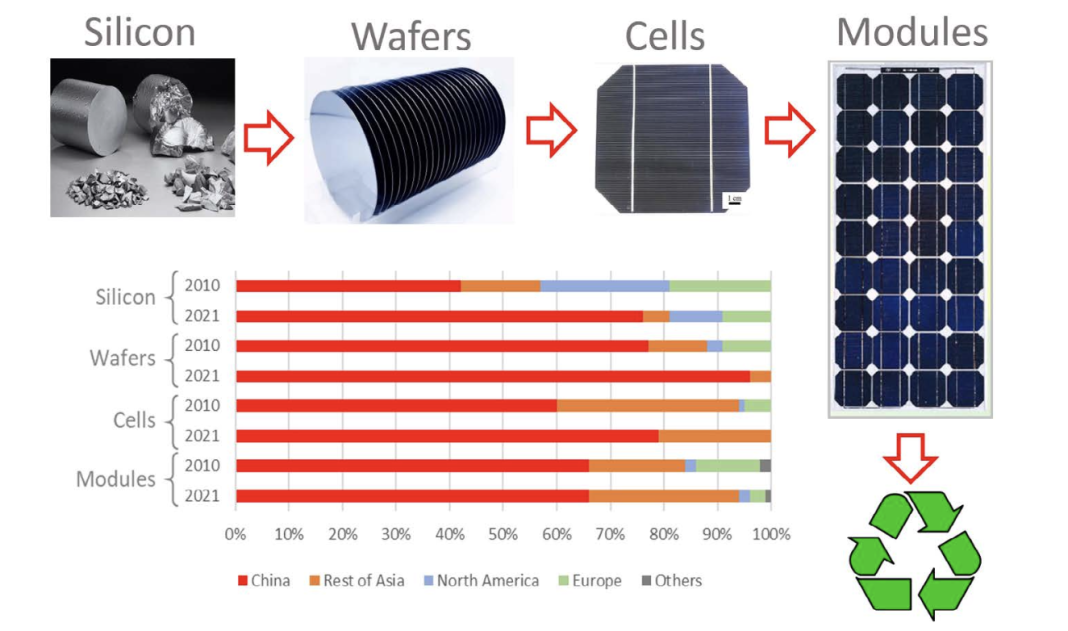
The solar energy industry is widely recognized as one of the cornerstones of the global transition toward clean and renewable energy. At the heart of this industry lies silicon — the essential material used to manufacture most of today’s solar panels. While silicon-based photovoltaics (PV) provide an environmentally friendly alternative to fossil fuels, the production process itself carries its own environmental challenges.
This article explores the environmental impact of the silicon solar panel industry and highlights sustainability strategies that can ensure the sector remains both economically viable and environmentally responsible.
1. Energy-Intensive Production of Polysilicon
Polysilicon, the purified form of silicon, is the starting point of the solar panel value chain. However, its production requires extremely high temperatures and energy-intensive processes.
- Challenge: Traditional methods such as the Siemens process consume vast amounts of electricity.
- Environmental Impact: When powered by coal or fossil fuels, polysilicon production can generate significant carbon emissions.
- Sustainability Solution: Transitioning production facilities to renewable-powered grids reduces the carbon footprint. Some manufacturers are already locating plants near hydroelectric or solar farms to ensure cleaner inputs.
2. Chemical Waste and Resource Management
During polysilicon purification and wafer production, large volumes of chemicals such as hydrochloric acid, trichlorosilane, and solvents are used.
- Challenge: Improper disposal of these chemicals can contaminate soil and water sources.
- Environmental Impact: Local ecosystems and communities near production sites are most at risk.
- Sustainability Solution: Closed-loop recycling systems capture and reuse chemicals, minimizing waste and protecting the environment.
3. Material Waste from Wafer Cutting
The wafering stage, where silicon ingots are sliced into ultra-thin wafers, generates considerable material loss known as kerf waste.
- Challenge: Up to 40% of the silicon ingot can be lost as fine dust.
- Environmental Impact: This not only wastes valuable raw material but also requires additional energy and resources to produce replacement polysilicon.
- Sustainability Solution: Diamond wire sawing and advanced wafer-thinning technologies significantly reduce kerf losses, improving resource efficiency.
4. Solar Module End-of-Life Concerns
While solar panels last 25–30 years, the industry is now facing the challenge of dealing with end-of-life modules.
- Challenge: Without proper recycling, old panels could end up in landfills, creating waste management issues.
- Environmental Impact: Materials such as lead-based solder, aluminum, and glass may contribute to environmental degradation if not properly reclaimed.
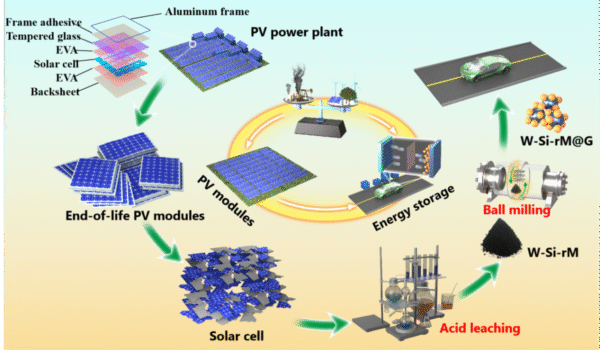
- Sustainability Solution: Solar recycling programs are emerging worldwide to recover glass, aluminum, and even silicon wafers for reuse in new panels.
5. Water Consumption in Manufacturing
Water plays a vital role in cooling, cleaning, and chemical processing throughout the silicon value chain.
- Challenge: High water usage in regions facing scarcity can strain local resources.
- Sustainability Solution: Closed-loop water recycling systems, coupled with dry-processing technologies, reduce freshwater consumption and promote circular use of water resources.
6. The Role of Vertical Integration in Sustainability
Companies that operate across the entire silicon value chain are uniquely positioned to drive sustainability.
- Advantage: Vertical integration allows for consistent environmental standards across all stages of production.
- Impact for Customers: Beyond product quality, customers gain confidence knowing their solar investment supports sustainable practices from start to finish.
7. Future Outlook: Toward a Truly Green Industry
The solar panel silicon industry is at a turning point. As global demand for renewable energy surges, manufacturers must balance rapid scaling with sustainable practices.
- Innovation Pathways:
- Green hydrogen as a reducing agent in silicon production.
- Adoption of perovskite-silicon tandem cells for higher efficiency with less material use.
- Expanding global recycling infrastructure for solar modules.
- Global Impact: With these strategies, the industry can ensure that the promise of solar energy — clean, renewable, and sustainable — is fulfilled without unintended environmental costs.
Conclusion
Silicon solar panels have already transformed the global energy landscape, providing clean alternatives to fossil fuels. Yet the industry must recognize that sustainability does not end with electricity generation; it begins at the very first stage of the silicon value chain and continues through end-of-life management.
At Han Solar Tech, we believe that embracing sustainability is not just a responsibility but also an opportunity — an opportunity to build trust, reduce environmental impact, and lead the way toward a cleaner, greener future powered by solar energy.