
Educational Tutorial: A Comprehensive Overview of the Solar Panel Silicon Value Chain
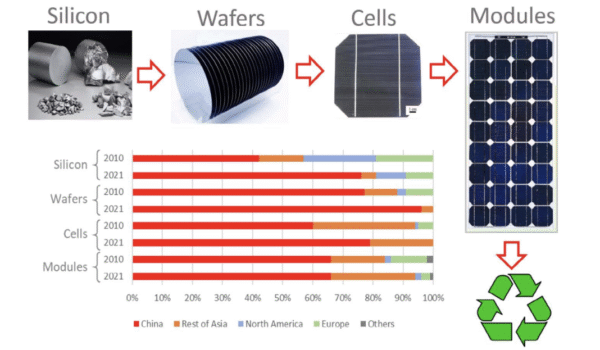
Silicon has been at the center of the solar energy revolution for decades. It is the most abundant element in the Earth’s crust after oxygen, and its unique electronic properties make it the perfect material for converting sunlight into electricity. The journey of silicon, however, is not simple. It requires a highly sophisticated value chain that transforms raw quartz sand into high-efficiency solar modules capable of powering homes, businesses, and entire cities.
This article provides a comprehensive tutorial on the Solar Panel Silicon Value Chain. It explains each stage in detail — from Polysilicon production to Ingot growth, Wafer slicing, Solar Cell processing, and Module assembly — and discusses the technical challenges, innovations, sustainability efforts, and customer benefits tied to this global industry.
1. Polysilicon: Purifying Quartz into the Building Block of Solar
The first step of the value chain begins with quartz sand, which is rich in silicon dioxide (SiO₂). Through metallurgical processing, this sand is reduced to metallurgical-grade silicon. However, solar cells require ultra-pure polysilicon, where purity levels reach 99.9999999% (known as “nine nines” or 9N purity).
- Process: The Siemens process and newer fluidized bed reactor (FBR) methods are commonly used for purification.
- Challenges: Polysilicon production is energy-intensive, requiring high temperatures and advanced chemical handling.
- Global Leaders: China dominates the global polysilicon supply, while Germany, the U.S., and emerging Middle Eastern producers are strengthening their roles.
Polysilicon is the foundation of solar power — without it, the photovoltaic (PV) industry cannot operate.
2. Ingot: Shaping Silicon into Solid Crystals
Once polysilicon is produced, it must be melted and re-crystallized into solid ingots. This step ensures a uniform crystal structure that directly influences the efficiency of solar cells.
- Czochralski Method: A seed crystal is dipped into molten silicon and slowly withdrawn, forming a large cylindrical monocrystalline ingot.
- Casting Method: For multicrystalline silicon, molten silicon is cooled in rectangular molds.
- Types of Ingots:
- Monocrystalline: Higher efficiency, higher cost, visually recognized by black-colored solar panels.
- Multicrystalline: Slightly lower efficiency, more affordable, typically blue-colored panels.
The ingot stage determines the structural quality and defect levels of wafers, setting the tone for the next steps.
3. Wafer: Precision Cutting for Solar Efficiency
The ingots are sliced into thin wafers — the delicate substrates where photovoltaic magic happens.
- Thickness: Modern wafers are as thin as 150–180 microns (about twice the thickness of a human hair).
- Cutting Technology: Diamond wire sawing has replaced older slurry methods, minimizing material waste (kerf loss) and lowering costs.
- Surface Preparation: Wafers undergo texturing and cleaning to maximize light absorption.
High-quality wafers are critical: they act as the “canvas” upon which solar cells are built.
4. Solar Cell: Turning Light into Electricity
Wafers alone cannot produce electricity. They must be transformed into solar cells through complex semiconductor engineering.
- Process: Doping with phosphorus or boron creates positive and negative layers, forming a p-n junction. Anti-reflective coatings and metallic contacts are then added.
- Technologies:
- PERC (Passivated Emitter and Rear Cell): Boosts efficiency by reflecting unused light back into the cell.
- TOPCon (Tunnel Oxide Passivated Contact): Improves electron flow, offering >25% efficiency.
- HJT (Heterojunction Technology): Combines crystalline and amorphous silicon for high efficiency and low degradation.
- Performance: Today’s commercial solar cells achieve 22–25% efficiency, while research prototypes reach above 30%.
Solar cells are the “engines” of solar panels, converting sunlight directly into usable electricity.
5. Module: Assembling Durable Solar Panels
Dozens of solar cells are interconnected to form a solar module, the final product installed on rooftops and solar farms.
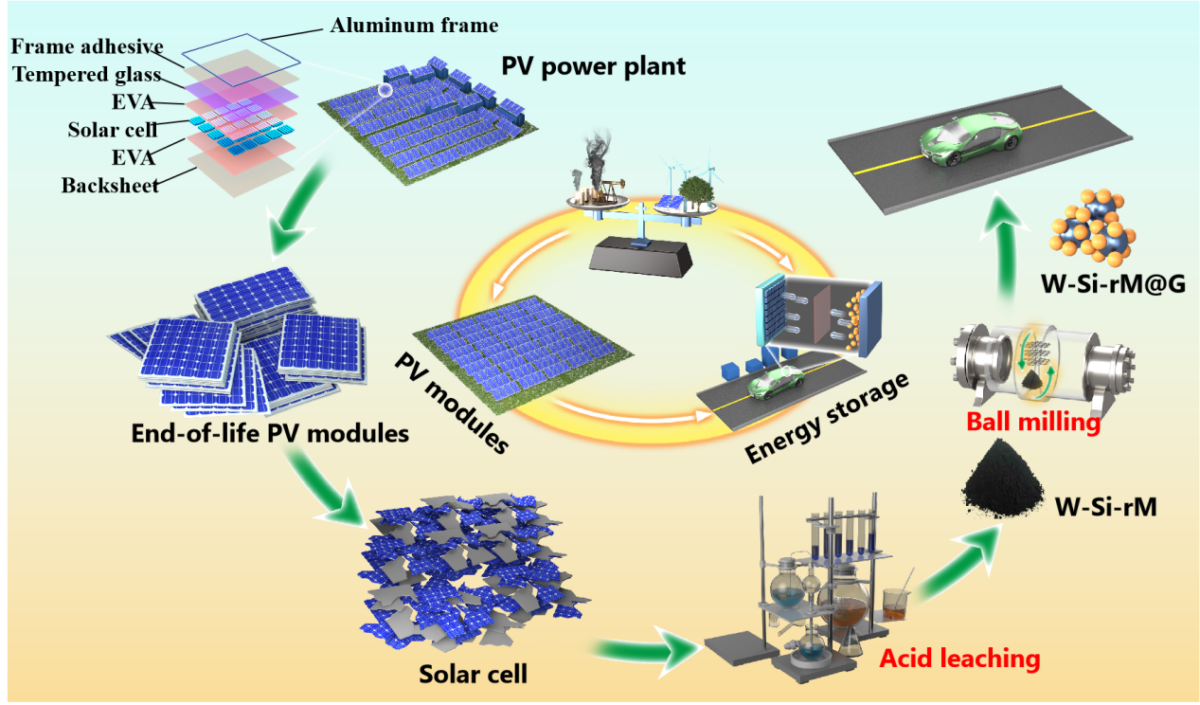
- Encapsulation: Layers of EVA film, tempered glass, and a protective backsheet shield cells from UV, moisture, and mechanical damage.
- Framing: Aluminum frames add structural rigidity and ease of installation.
- Output: Modern modules now range from 500 W to 720 W, with Trina Solar, LONGi, and JA Solar leading in ultra-high-power products.
- Reliability: High-quality modules last 25–30 years, with minimal annual degradation.
Modules represent the visible face of the value chain, but their performance depends on every upstream process.
6. Integration and Business Value
Companies that control the entire value chain — from polysilicon to module assembly — are called vertically integrated manufacturers.
- Advantages:
- Higher quality control.
- Lower costs through economies of scale.
- Faster adoption of new technologies.
- For Customers: This means more reliable warranties, better long-term performance, and reduced risks.
Vertical integration is a key differentiator for global leaders — and a focus for Han Solar Tech.
7. Technical and Market Challenges
The silicon value chain faces several challenges:
- Energy Consumption: Polysilicon production is energy-heavy, raising environmental concerns.
- Supply Chain Risks: Political tensions and concentration of supply in certain regions create vulnerabilities.
- Material Limits: Thinner wafers increase fragility, requiring innovation in handling and processing.
Addressing these challenges requires investment in R&D, recycling, and diversification of supply chains.
8. Sustainability and the Future of Silicon in Solar
Sustainability is no longer optional; it is essential for the solar industry.
- Recycling: End-of-life module recycling can recover glass, aluminum, and even silicon.
- Green Factories: Many manufacturers are now powering their facilities with renewable energy.
- Next-Gen Materials: While perovskites and tandem cells are emerging, silicon will remain dominant due to its maturity and cost advantages.
The future lies in high-efficiency, low-cost, and environmentally friendly silicon solar panels.
Conclusion
The Silicon Value Chain is the backbone of the solar industry, transforming raw sand into sophisticated modules that power the world. Each stage — Polysilicon, Ingot, Wafer, Cell, and Module — plays a vital role in performance, cost, and sustainability.
At Han Solar Tech, we embrace this full value chain through vertical integration, ensuring every product reflects our commitment to quality, innovation, and reliability. By understanding the silicon cycle, customers, partners, and policymakers can appreciate the technological depth of solar energy and its potential to drive a clean, sustainable future.